
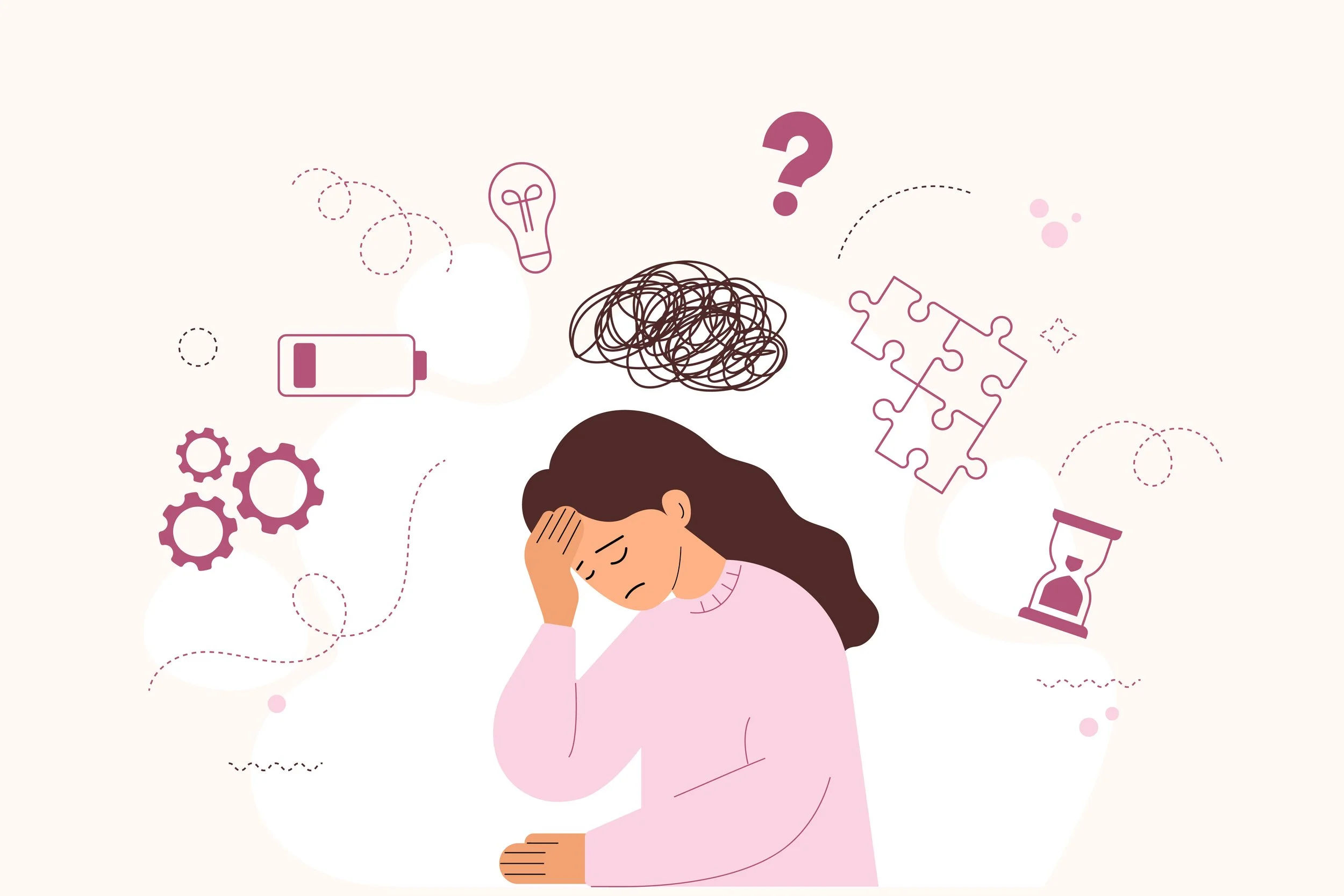
Sometimes the Problem Isn't Your Body—It's the Weight Your Mind Has Been Carrying.
Have you ever woken up after a full night's sleep and still felt exhausted?
You drag yourself through the day. Simple tasks feel overwhelming. Making decisions seems harder than it should. Your patience is shorter. You find yourself saying, "I'm just so tired," but no amount of sleep seems to help.
If this sounds familiar, you may not be physically exhausted.
You may be mentally exhausted.
Mental exhaustion is something I see frequently in my therapy practice. It affects people of all ages and backgrounds—parents, caregivers, professionals, students, retirees, and individuals simply trying to manage the demands of everyday life.
The good news is that mental exhaustion is not a personal failure. It's often your mind's way of signaling that it needs care, attention, and restoration.
What Is Mental Exhaustion?
Mental exhaustion happens when your brain has been under continuous emotional or psychological stress for an extended period of time.
Unlike physical exhaustion, which often improves after a good night's sleep, mental exhaustion tends to linger because the source of the fatigue hasn't been addressed.
Your body may be resting.
Your mind isn't.
Many people continue replaying conversations, worrying about tomorrow, solving problems, caring for others, or carrying emotional burdens long after the day is over.
Eventually, the brain begins asking for a break.
Common Signs of Mental Exhaustion
Mental exhaustion doesn't always look dramatic.
Sometimes it quietly builds over weeks or months.
You may notice:
Difficulty concentrating
Feeling overwhelmed by simple tasks
Increased irritability
Forgetfulness
Trouble making decisions
Feeling emotionally numb
Lack of motivation
Withdrawing from family or friends
Feeling like you're "running on empty"
Many people assume they're simply lazy or unmotivated.
More often, they're simply depleted.
Why Does It Happen?
Life has a way of piling responsibilities on top of one another.
Work deadlines.
Family responsibilities.
Financial concerns.
Health challenges.
Relationship struggles.
Caring for children.
Caring for aging parents.
Trying to keep everyone else happy.
Eventually, your emotional reserves begin running low.
One stressful event usually isn't the problem.
It's carrying stress without enough opportunities to recover.
The Hidden Pressure We Place on Ourselves
Sometimes the greatest source of exhaustion isn't everything happening around us.
It's the expectations we place on ourselves.
Many people believe they should always be productive.
Always available.
Always strong.
Always positive.
Always capable of handling one more thing.
These beliefs can quietly create enormous pressure.
Over time, they leave very little room for rest, grace, or self-compassion.
Five Ways to Begin Recharging Your Mind
Recovery doesn't usually happen through one big change.
It happens through small, consistent choices that allow your mind to recover.
Here are five places to begin:
1. Give Yourself Permission to Rest
Rest is not laziness.
Rest is part of maintaining your emotional health.
Sometimes the healthiest decision you can make is to slow down.
2. Notice What You're Carrying
Take a few moments each day to ask yourself:
"What has been weighing on my mind lately?"
Simply recognizing your emotional load often reduces its intensity.
3. Create Moments of Quiet
Even five or ten minutes without emails, social media, television, or constant stimulation can give your brain an opportunity to reset.
Quiet isn't wasted time.
It's recovery.
4. Practice Self-Compassion
Pay attention to the way you speak to yourself.
Would you speak to someone you love the same way?
If not, it's time to begin changing that conversation.
5. Ask for Support
You don't have to wait until you're overwhelmed to ask for help.
Sometimes one conversation can help you see things from an entirely different perspective.
Therapy provides a safe place to slow down, sort through what's weighing on you, and develop healthier ways of responding to life's challenges.
Mental Exhaustion Is a Signal—Not a Weakness
One of the biggest misconceptions about mental health is that asking for help means you aren't strong enough.
The opposite is often true.
Recognizing that you're overwhelmed requires honesty.
Seeking support requires courage.
Healing requires intentionality.
Mental exhaustion doesn't mean you're failing.
It means you've been carrying a heavy emotional load for a long time.
Small Changes Make a Big Difference
You don't need to completely reorganize your life overnight.
Instead, start with one small question:
"What is one thing I can do today that will give my mind a little more peace?"
Maybe it's taking a short walk.
Turning off your phone for an hour.
Going to bed earlier.
Saying "no" to one more obligation.
Calling someone you trust.
Scheduling your first therapy appointment.
Small decisions repeated consistently often create the biggest changes.
You Don't Have to Carry Everything Alone
At The Counseling Center for Change, we believe therapy isn't about fixing broken people.
It's about helping people better understand themselves, strengthen their resilience, and develop practical tools for navigating life's challenges.
Whether you're struggling with anxiety, depression, stress, relationship concerns, ADHD, self-esteem, grief, or simply feeling emotionally overwhelmed, you don't have to figure it out by yourself.
Sometimes healing begins with one conversation.
If you've been feeling emotionally drained lately, pause for a moment.
Take a breath.
Ask yourself:
"What do I need—not just to get through today—but to truly take care of myself?"
Your mental health deserves the same attention and compassion that you would give your physical health.
You don't have to earn rest.
You don't have to wait until you're completely burned out.
And you don't have to carry everything alone.
Sometimes the strongest thing you can do is recognize that your mind needs care, too.
Because healing doesn't begin when life becomes easier. It begins when you decide you don't have to carry it all by yourself.
