
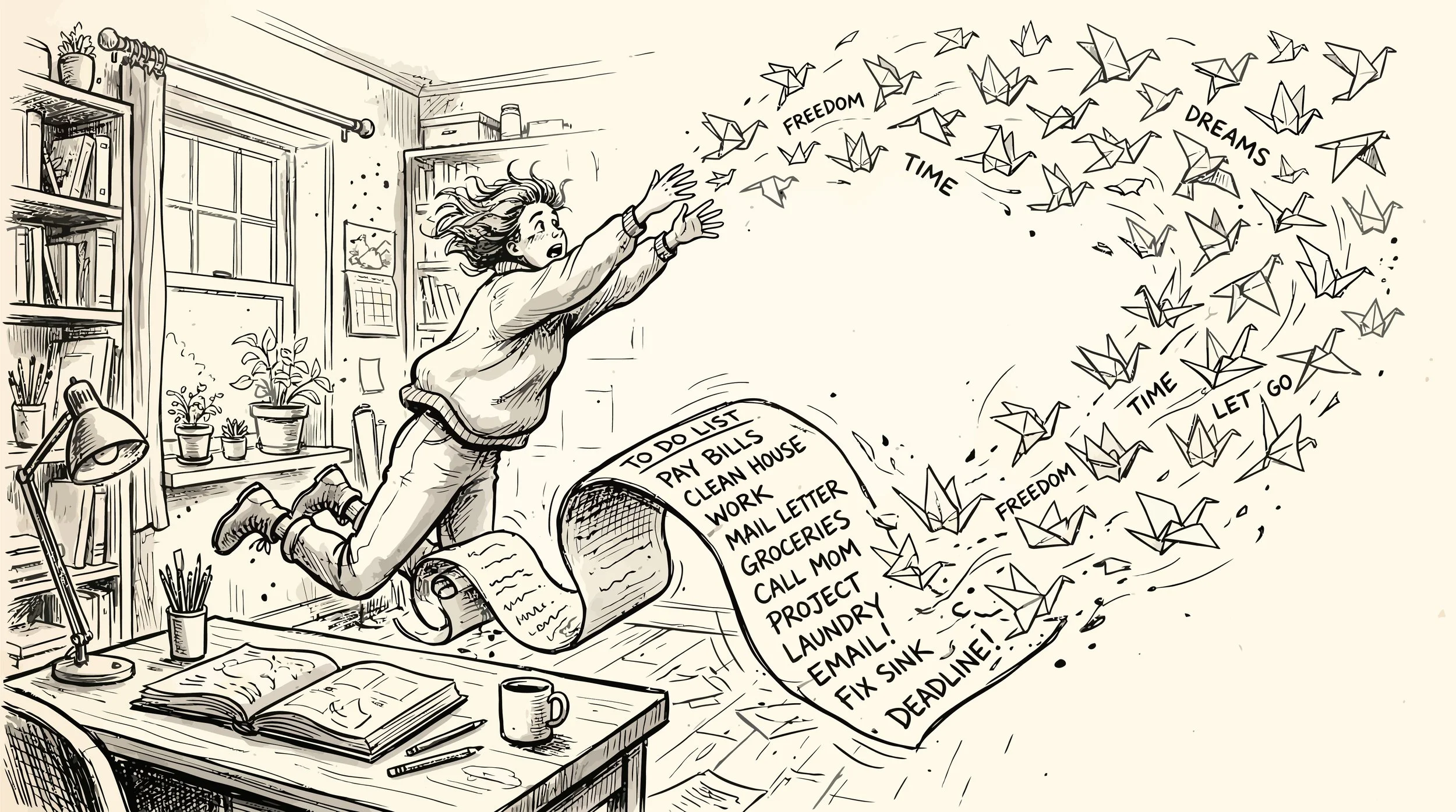
To-do lists are supposed to make life easier.
We write things down so we don't have to keep everything in our heads. We organize our responsibilities, prioritize what needs to happen, and hopefully get the satisfying feeling of crossing something off when it's finished.
But sometimes, a to-do list stops feeling helpful.
Instead of creating a sense of organization, looking at it makes you feel overwhelmed. You cross off one task and immediately think about the five things you haven't done. You add things faster than you can complete them. You might even find yourself rewriting or reorganizing the list because figuring out where to start feels impossible.
At that point, your to-do list may be doing more than keeping you organized.
It may be feeding your anxiety.
When Productivity Starts to Feel Like Pressure
There's nothing wrong with wanting to be productive. Having structure can be incredibly helpful, especially when you're balancing work, family, appointments, household responsibilities, relationships, and everything else competing for your attention.
The problem starts when productivity becomes connected to how you evaluate yourself.
Maybe you feel guilty when you're resting because there are still things that could be done.
Maybe an unfinished task follows you around mentally, even when you're supposed to be enjoying yourself.
Or maybe you've started measuring whether you had a "good day" based entirely on how much you accomplished.
When that happens, the list isn't simply helping you remember what needs to get done.
It's becoming a scoreboard.
And when we treat productivity like a scoreboard, it can feel as though we're constantly losing.
Signs Your To-Do List Might Be Increasing Your Anxiety
Everyone has busy periods, and occasionally feeling overwhelmed by everything you have to do doesn't necessarily mean there's a problem.
But it may be worth paying attention if you regularly notice certain patterns.
Your list never feels finished.
You complete something and immediately replace it with another task. Instead of feeling accomplished, you're already thinking about what's next.
You have trouble deciding where to start.
When everything feels important, choosing one task can become surprisingly difficult. You might bounce between several things without finishing any of them—or avoid starting altogether.
You feel guilty when you're resting.
You sit down to watch television, spend time with your family, read, or simply do nothing, but part of your brain keeps reminding you about what you "should" be doing instead.
Small tasks begin to feel much bigger than they are.
Sending an email, scheduling an appointment, returning a phone call, or putting away laundry can start to feel overwhelming when it's surrounded by dozens of other responsibilities.
You're constantly thinking about what you've forgotten.
Even when you have a list, you may still feel like something is slipping through the cracks.
You focus more on what you didn't accomplish than what you did.
You may complete ten things and still end the day thinking about the two things that remain unfinished.
If any of these sound familiar, it might be time to change how you're approaching your list.
Why We Avoid Things That Make Us Anxious
One of the frustrating things about feeling overwhelmed is that it doesn't always make us more productive.
Sometimes it does the opposite.
When a task feels uncomfortable, complicated, uncertain, or simply too big, avoiding it can provide temporary relief.
You tell yourself you'll do it tomorrow.
You check your email instead.
You clean something that wasn't particularly urgent.
You scroll through your phone for a few minutes.
You reorganize the list.
For a moment, the uncomfortable feeling decreases.
But the task is still there.
Eventually, you remember it again—and now you may be dealing with the original task plus frustration with yourself for not starting sooner.
That can create a cycle:
The task creates anxiety → you avoid the task → you temporarily feel better → the task remains → your anxiety increases.
Recognizing this cycle is important because avoidance isn't always about laziness or a lack of motivation.
Sometimes we're simply trying to get away from an uncomfortable feeling.
Stop Treating Every Task Like It's Equally Important
One of the easiest ways to make a to-do list overwhelming is to put everything on the same list.
"Respond to email."
"Schedule dentist appointment."
"Buy paper towels."
"Finish major work project."
"Plan vacation."
"Call Mom."
"Clean garage."
Suddenly, buying paper towels and finishing a major project are visually competing for your attention.
Your brain sees one giant collection of unfinished responsibilities.
Instead, try separating your tasks.
Ask yourself:
What actually needs my attention today?
Not this week.
Not eventually.
Today.
Choose a small number of priorities and allow everything else to live somewhere else.
You can still keep a master list so you don't forget anything. But your daily list doesn't need to contain every responsibility in your life.
Make the First Step Smaller
Sometimes the problem isn't the task itself.
It's how we've written it.
Consider something like:
"Organize the house."
That's not really one task. It's dozens of tasks hiding inside three words.
Where do you start?
How long will it take?
What does "organized" even mean?
A vague task can feel intimidating because your brain has to figure out the entire process before you can begin.
Instead, make the first step extremely specific.
Rather than:
Organize the house
Try:
Clear everything off the kitchen counter.
Instead of:
Figure out finances
Try:
Open the credit card statement and review this month's charges.
Instead of:
Get healthier
Try:
Take a 15-minute walk after dinner.
You're not lowering your standards.
You're giving yourself somewhere to start.
Pay Attention to the Word "Should"
Take a look at your current mental or written to-do list.
How many things are there because you genuinely need or want to do them?
And how many are there because you think you should?
"I should keep the house cleaner."
"I should exercise more."
"I should respond immediately."
"I should be more productive."
"I should be able to handle this."
"I should have figured this out by now."
The word "should" can quietly turn expectations into obligations.
The next time you catch yourself thinking, "I should..." pause and ask:
According to whom?
Sometimes the answer will be reasonable. Yes, there are responsibilities we need to handle even when we don't particularly want to.
But occasionally, you may realize you're holding yourself to a standard you would never expect from someone else.
Schedule Rest Like It Actually Matters
If your approach to rest is "I'll relax when everything is done," there's a good chance you won't relax very often.
There will almost always be another email.
Another load of laundry.
Another project.
Another errand.
Another thing you could be doing.
Rest doesn't need to be something you earn by reaching the bottom of your list.
It can simply be part of taking care of yourself.
That might mean protecting an evening without plans, putting your phone down for thirty minutes, taking your lunch break instead of working through it, going for a walk, spending time outside, or doing something simply because you enjoy it.
Rest isn't the opposite of being productive.
It's part of being human.
Try the "Three Things" Approach
If your current list feels overwhelming, try something simpler tomorrow.
Choose three things:
One thing you need to do.
This is your genuine priority.
One small thing you've been putting off.
Choose something manageable that will give you a little mental relief once it's finished.
One thing for yourself.
This could be going for a walk, calling someone you enjoy talking to, reading, exercising, sitting outside, going to bed earlier, or simply giving yourself some uninterrupted downtime.
That's it.
You can accomplish more if you want to.
But those three things become your foundation for the day.
This approach can help shift the question from:
"How much can I possibly get done today?"
to:
"What would make today feel manageable and meaningful?"
That's a very different standard.
Your Worth Isn't Measured in Checkmarks
There will be days when you accomplish everything you planned.
There will also be days when you don't.
Sometimes you'll be focused and energized.
Other days, getting through your basic responsibilities may require most of what you have available.
Neither kind of day determines your worth.
A to-do list is a tool.
It's supposed to work for you—not become another way to criticize yourself.
So if looking at your list makes your shoulders tense, your thoughts race, or your first instinct is to avoid it completely, try changing the list instead of immediately blaming yourself.
Make it shorter.
Make the tasks smaller.
Decide what can wait.
Remove something that doesn't actually need to be there.
And remember to leave some room for yourself, too.
Because a successful day doesn't have to mean doing everything.
Sometimes, it simply means doing what mattered—and recognizing when you've done enough.
